U úuchben tsikbalil u sistemaʼob ruleta
Kaʼapʼéel siglo tuʼux máak tu tsʼíibtaj yaʼalmajtʼaanoʼob utiaʼal u kʼeexik u taakʼinil u apuesta.
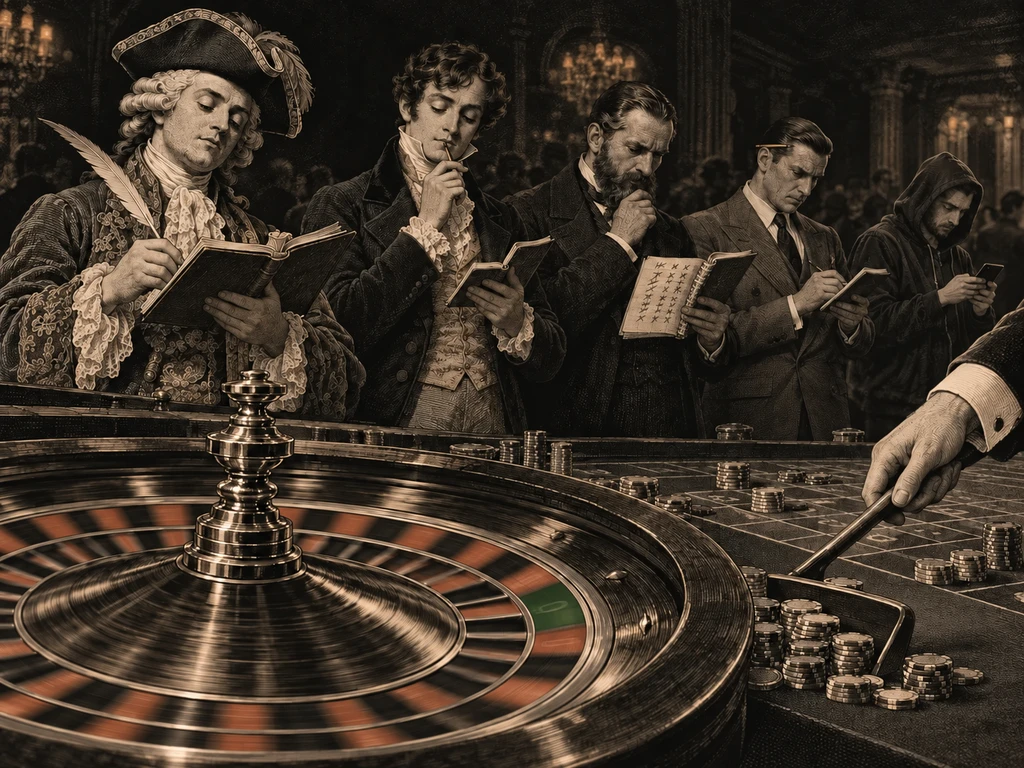
Martingale tiʼ u siglo 18; D’Alembert yaan u kʼaabaʼ juntúul máak xak matemáticas maʼ tu yaabiltaj; Labouchère u báaxal juntúul político tu kʼiiniloʼob Victoria. Mix junpʼéel tiʼ letiʼob meyajnaj tu kʼiinil xan.
Martingale
The 1762 Académie française dictionary records martingaleestrategiaMartingaleProgresión ku kaʼatéenkuntik le apuesta tu paach cada sáatal. Il le xóotʼol Estrategia utiaʼal a wilik baʼax ku beetik yéetel baʼax maʼ tu beetik.Xok tuláakal → as a gambling term for staking what has been lost. Its 1878 edition explicitly describes doubling after a loss and also uses the word more broadly for betting schemes. These entries document usage; they do not identify a single inventor.
Today the familiar doubling progressionestrategiaProgresiónJe máakalmáak regla ku kʼeexik u taakʼinil apuesta yéetel le jóokʼoloʼob máanoʼob. Progresionoʼob negativas ku naʼaksikoʼob tu paach sáatal, positivas tu paach náajal.Xok tuláakal → aims to recover previous losses and gain one starting unittaakʼinUnidadLe apuesta chuun ku meyajtik junpʼéel sistema wa junpʼéel máax ku báaxal. Le progresionoʼoboʼ ku tsoltaʼaloʼob yéetel unidadoʼob utiaʼal ka meyajnakoʼob tiʼ je máakalmáak mesa.Xok tuláakal → when a win arrives. A finite bankrolltaakʼinU taakʼin báaxalTuláakal le taakʼin tsʼaʼaban utiaʼal báaxal. U kanáantaʼal u taakʼin báaxal letiʼ u yéeyaʼal bukaʼaj tiʼ ka tsʼáaik ich sajbeʼentsil tiʼ cada apuesta yéetel tiʼ cada sesión.Xok tuláakal → or table limitmesaU xuʼul mesaLe apuesta asab chichan yéetel asab nojoch ku chaʼabal. Le máximoʼ letiʼ ku jeʼelsik le progresionoʼob ku kaʼatéenkuntikoʼob apuesta.Xok tuláakal → can stop the sequence first. The Strategy section shows how those limits affect a session.
D’Alembert
The progression bearing d’Alembert’s name raises the stake by one unit after a loss and lowers it after a win. The name alone does not prove who devised or endorsed the betting rule.
Its mathematical issue is straightforward: on independent spinsmatemáticasSuutoʼob tu juunaloʼobCada suut yaan le páajtalil jumpʼéeliliʼ, mix baʼal u yil baʼax úuch táanil. Letiʼ u chuun cada xook ich le sitioaʼ.Xok tuláakal →, a run of one outcome does not make the opposite outcome due. A famous namesake does not change that assumption or the payouttaakʼinBoʼolBaʼax ku suutik junpʼéel apuesta náajalnaj, ku yaʼalaʼal je bix “X tiʼ 1” yóokʼol u taakʼinil apuesta ku suut.Xok tuláakal →.
Labouchère
The cancellation system uses a list of numbers to determine the next stake. A win removes entries and a loss adds an entry; the Strategy section sets out the rules and examples. Historical stories about its namesake should be distinguished from evidence that the method creates an advantage.
A sequence may clear with a profit, but a losing run can leave a growing list and larger required stakes. How often it clears depends on the starting list, bankroll, limits and stopping rule. There is no universal success percentage.
U siglo 20
A simulation can show how a specified system behaves under a chosen wheel model. It cannot test every possible rule, and a finite run need not return exactly the theoretical house edgematemáticasU náajal casinoLe xóotʼol tiʼ cada apuesta ku kanáantik casino tu promedio: 2.70% ich ruleta europea.Xok tuláakal →.
For independent uniform single-zeroruedaCeroLe chéen junpʼéel yaʼax joʼol maʼ tu chʼaʼik mix junpʼéel apuesta junpʼéel tiʼ junpʼéel, docena wa columna; tuʼux ku taal u náajal casino. Uláakʼ u kʼaabaʼ: junpʼéel cero, 0.Xok tuláakal → spins with standard full-loss-on-zero payouts, each unit staked has expected net return −1/37. For a bounded session whose stakes are chosen using information available before each spin, adding the conditional expectations gives expected lossmatemáticasU sáatal ku páaʼtaʼalU tojol ku páaʼtaʼal xoʼokbil yéetel tuláakal le taakʼin tsʼaʼab apuesta; u promedio taakʼin ku sáatal ich junpʼéel sesión wa junpʼéel kʼiin.Xok tuláakal → equal to 1/37 of expected turnovertaakʼinU tuláakal apuestaTuláakal le taakʼin tsʼaʼab apuesta ich junpʼéel sesión wa junpʼéel kʼiin, yéetel le náajaloʼob ku suut u tsʼaʼabal apuesta. Uláakʼ u kʼaabaʼ: handle, action.Xok tuláakal →. Stopping or changing stakes can change the distribution of results, but not create positive expectation under those assumptions. Other payouts, such as la partageaʼalmajtʼaanLa partageAʼalmajtʼaan francés: ken jóokʼok cero, u chúumuk u taakʼinil junpʼéel apuesta junpʼéel tiʼ junpʼéel ku suut. Ku jaatsik tu chúumuk u náajal casino tiʼ le apuestaʼoboʼ, tak 1.35%.Xok tuláakal →, need their own calculation.
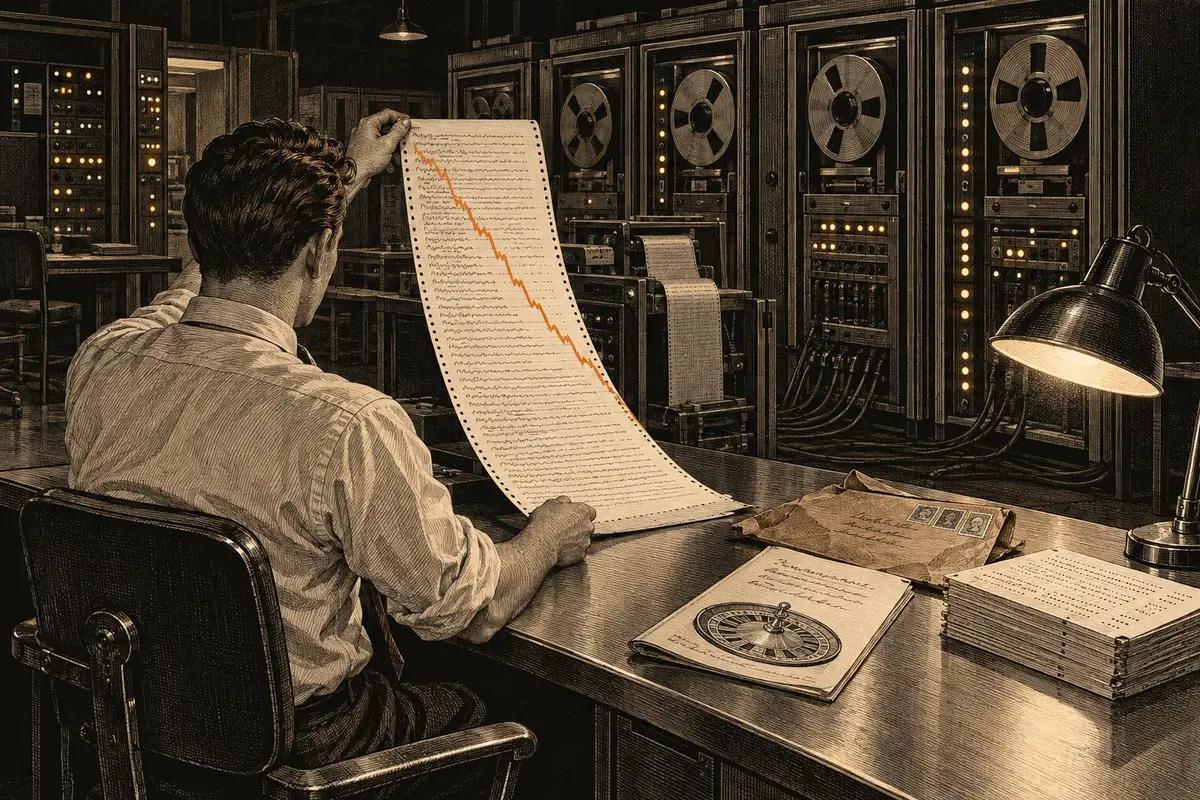
Ma jaaj tʼaan: junpʼéel estrategia ku náajal mantatsʼEstrategia Fibonacci ich ruleta
Baʼaxten ku pʼáatloʼob
A demonstration can end in profit without showing that the method has an edge. Some rules favor frequent small wins at the cost of occasional large losses; others do the reverse. The proportions depend on the exact rules and limits.
When comparing systems, look at all completed sessions, total stakes, losses and stopping conditions. A selected winning example leaves out the information needed to assess the claim.
Sistemaʼob utiaʼal koonol
Systems have also been sold with elaborate names and entry rules. The examples below illustrate the arithmetic of specific rules; they are not evidence of who first invented or marketed them. Waiting for a pattern does not alter the next independent spin’s probabilities.
Le maʼ sistemaiʼ
Yaʼalmajtʼaanoʼob utiaʼal xuʼulul: u yéeyaʼal táanil bukaʼaj taakʼin ken a sáat wa ken a náajal, yéetel u jóokʼol máak. Yaʼab téen ku koonaʼaloʼob bey junpʼéel xóotʼol tiʼ junpʼéel sistema, yéetel letiʼob le chéen xóotʼol ku beetik baʼal, tumen ku chichanchajsikoʼob u tuláakal apuesta. Minaʼan u kʼaabaʼob tiʼ juntúul máak, yéetel letiʼe le baʼax toj.
Kʼáatchiʼob
Martingale, yéetel junpʼéel siglo wa maas. U kaʼatéentaʼal apuesta tu paach junpʼéel sáatal letiʼe u yáax tuukul yaan tiʼ tuláakal máak.
D’Alembert maas naatsʼ, chéen tumen jaʼak u yóol. Pascal, Fermat, Huygens, Bernoulli yéetel Laplace tuláakloʼob tu tsoloʼob baʼaxten maʼ tu béeytaloʼob.
Tumen u maas yaʼab sesiónoʼob ku náajaloʼob, yéetel junpʼéel video tiʼ junpʼéel sesión ku náajaleʼ maʼ koʼoj u beetaʼal.
Utiaʼal a cheʼej
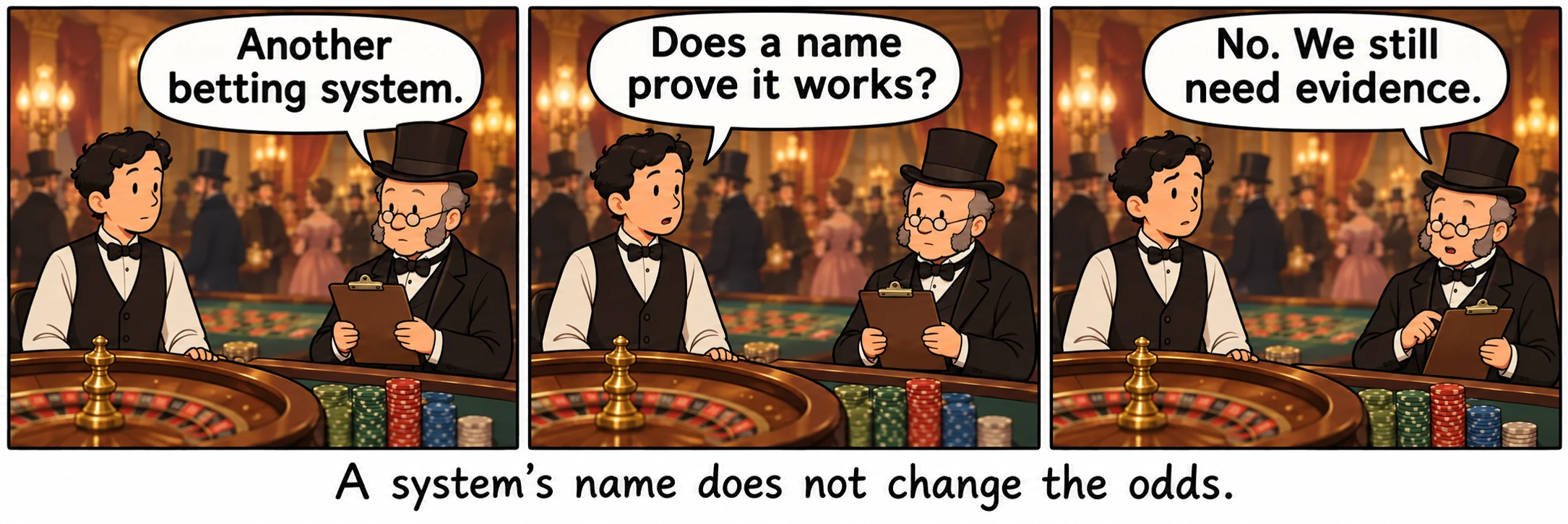
Kaʼapʼéel siglo yéetel kʼaabaʼob. Junpʼéel número.
Fuenteʼob
- Thorp, E. O. “Optimal gambling systems for favorable games.”
- Thorp, E. O. The Mathematics of Gambling.
- Doob, J. L. “Note on probability.”
- Halmos, P. R. “Invariants of certain stochastic transformations: the mathematical theory of gambling systems.”
- d’Alembert, J. “Croix ou pile.”
- Schwartz, D. G. Roll the Bones: The History of Gambling.
- Kavanagh, T. M. Dice, Cards, Wheels: A Different History of French Culture.
- Bollman, M. Mathematics of the Big Four Casino Table Games: Blackjack, Baccarat, Craps, & Roulette.
- Académie française, martingale, 1762
- Académie française, martingale, 1878